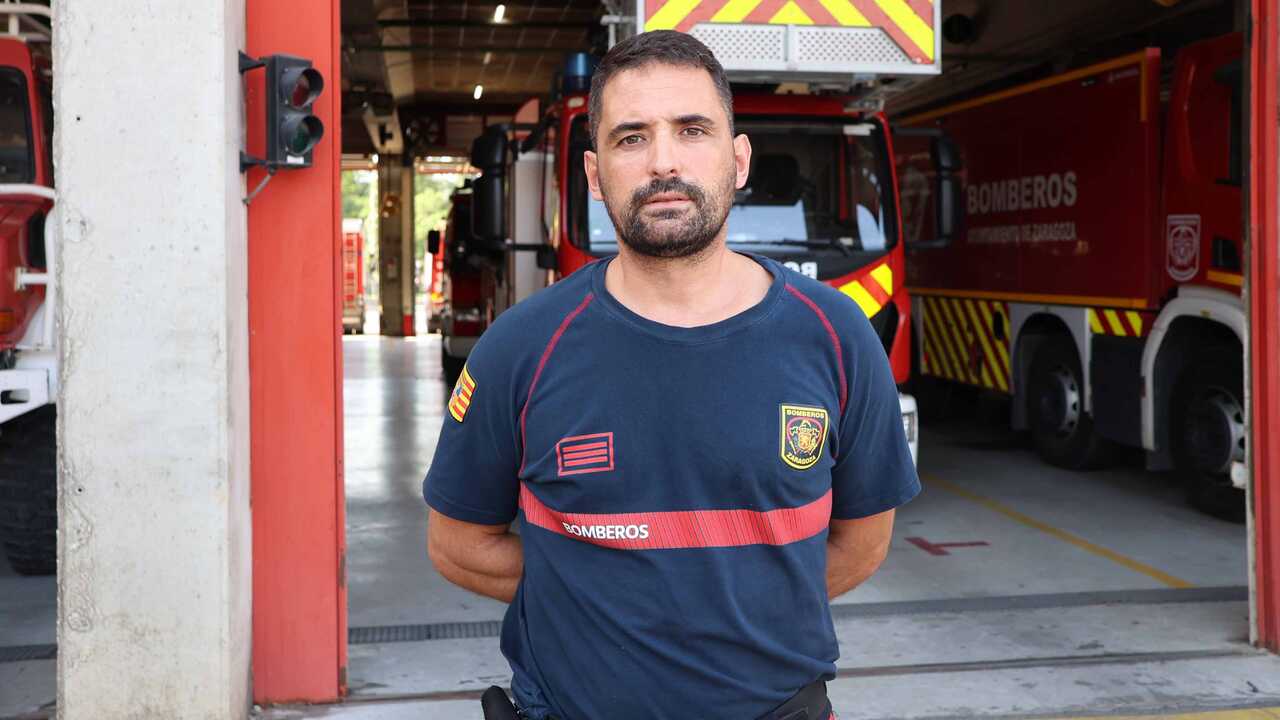
The Fire Station number 1 of Zaragoza, located on Valle de Broto street, is silent this Wednesday after the death of Juan Luis Alonso Lete during the intervention in the fire of a mechanical workshop in Calatorao. The sirens of a truck and the applause to say goodbye to his colleague broke a morning marked by consternation. «The loss of a teammate is the most that can happen to you in a service. We are devastated by the news,» Alejandro Loide, head of the park’s guard, tells ARAGÓN DIGITAL.
A loss that once again highlights the risks that firefighters face when their main objective, to save a life, involves putting their own to the limit. Entering a burning building in search of a trapped person means facing extreme temperatures, smoke, virtually zero visibility and weakened structures that can collapse in a matter of seconds. «In interventions in which people are involved, the risk reaches the limit,» explains Loide
RESCUING PEOPLE’S LIVES AS A PRIORITY
A large column of black smoke and flames alerted the residents of Calatorao on Tuesday, August 18. A mechanical workshop located in the heart of the town was engulfed in fire, causing intense smoke visible from different parts of the municipality.
The firefighters who went to the scene were alerted that a person was inside the workshop. During the work to try to rescue her, one of the walls of the building collapsed, which caused the death of the firefighter.

«The interventions that involve the most risk are those in which there are people involved. It is the moment when we expose ourselves the most,» says the head of duty at Fire Station number 1 in Zaragoza. «Our main goal is to rescue lives,» he says. However, he recognizes that it is precisely in these situations that troops face the greatest dangers
RISKS IN FIRE INTERVENTION
The risks that firefighters face during their interventions are multiple. «The first thing we put at risk are our lives,» explains Alejandro Loide. A danger that increases when there are other lives to save, as happened in the Calatorao fire. «Here it was the collapse of the structure due to the high temperatures that caused the collapse,» he says.
In addition to the risk of collapse of the structures, the watch chief highlights other dangers inherent to fires, such as exposure to extreme temperatures and the so-called «smoke diving», i.e. working in spaces with practically zero visibility and an atmosphere polluted by smoke. «It’s one of the really dangerous things,» he warns.