









It has just over 300 inhabitants, but hides one of the most surprising enclaves in Aragon. Vera de Moncayo, in the province of Zaragoza, is one of those towns that stand out quietly: small, quiet and with a historical heritage that makes it a unique destination, so much so that it even conquered the writer Gustavo Adolfo Bécquer.
At the foot of the imposing Moncayo, the highest mountain in the Iberian System, this municipality retains the character of the traditional villages of the area. Its natural environment, marked by the valley of the Huecha River and the proximity to the Moncayo Natural Park, make it an ideal place for a getaway.
But if there is something that makes Vera de Moncayo special, it is her link with history and literature. Here there are not only landscapes and monuments: there are centuries of monastic life and the imprint of one of the great names of Spanish romanticism.
- THE MONASTERY THAT INSPIRED BÉCQUER
- WHAT TO SEE IN VERA DE MONCAYO
- HOW TO VISIT THIS CORNER OF MONCAYO
THE MONASTERY THAT INSPIRED BÉCQUER
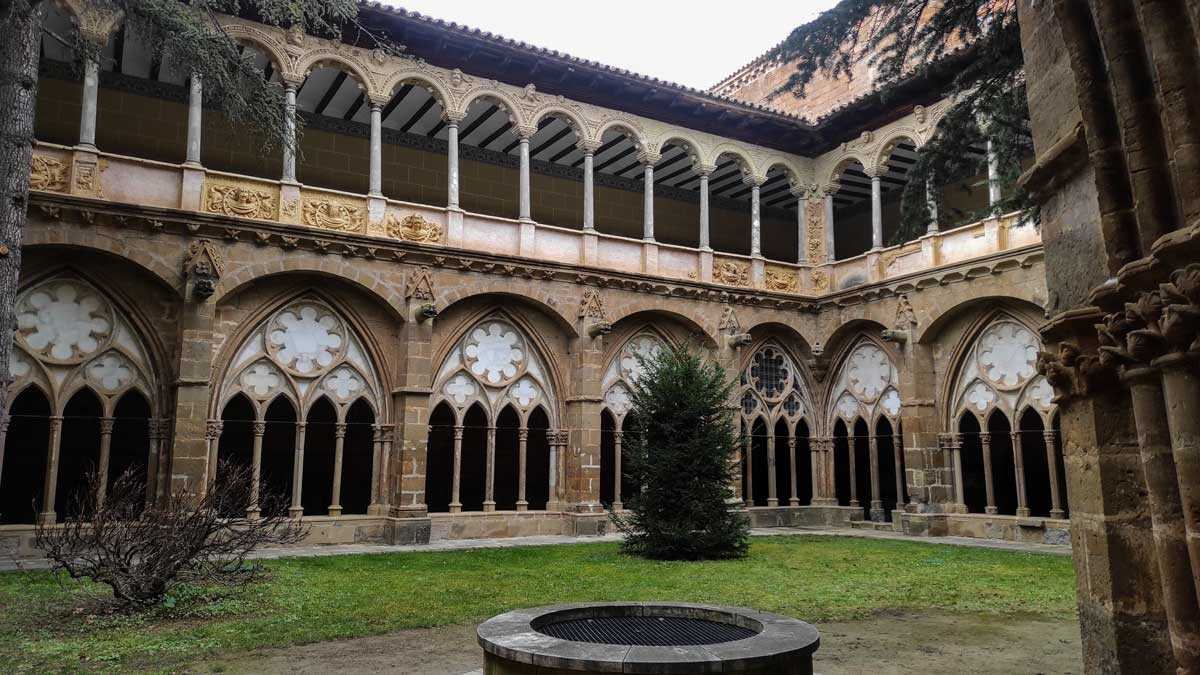
Just one kilometre from the town centre stands the Royal Monastery of Santa María de Veruela. Founded in 1145, this Cistercian complex is one of the best preserved in Aragon and one of the most outstanding heritage jewels of the community.

Touring its cloister, its church or the old monastic rooms allows you to understand what life was like for the monks for centuries. It was in this environment that Gustavo Adolfo Bécquer lived between 1863 and 1864 and wrote his famous Letters from my cell, turning the place into a benchmark of romanticism in España.
WHAT TO SEE IN VERA DE MONCAYO
Beyond the monastery, the town centre itself also preserves elements of great interest. In the upper part of the village are the remains of the old medieval castle, testimony to its past as a strategic territory in a historically border area.
Also noteworthy is the Church of the Nativity, built in the sixteenth century, with a Mudejar-Renaissance style tower and a valuable altarpiece from the Monastery of Veruela. In the surrounding area, enclaves such as the Cruz de Bécquer or the Celtiberian site of La Oruña expand the cultural and heritage offer.