








August 12, 2026 will be a date marked on the calendar for astronomy enthusiasts. That afternoon, Spain will be able to contemplate a total eclipse of the Sun, a phenomenon that has not occurred for more than a century, and just a few hours later will arrive the moment of maximum activity of the Perseids, one of the most anticipated meteor showers of the year. The conditions, in addition, will be especially favorable in Aragon and will also coincide with the new moon.
Aragon has an advantage in contemplating this phenomenon. The community has some of the skies with the lowest light pollution in the country and has several territories certified by the Starlight Foundation, as well as centres specialising in astronomical dissemination and a wide network of viewpoints spread across the three provinces.
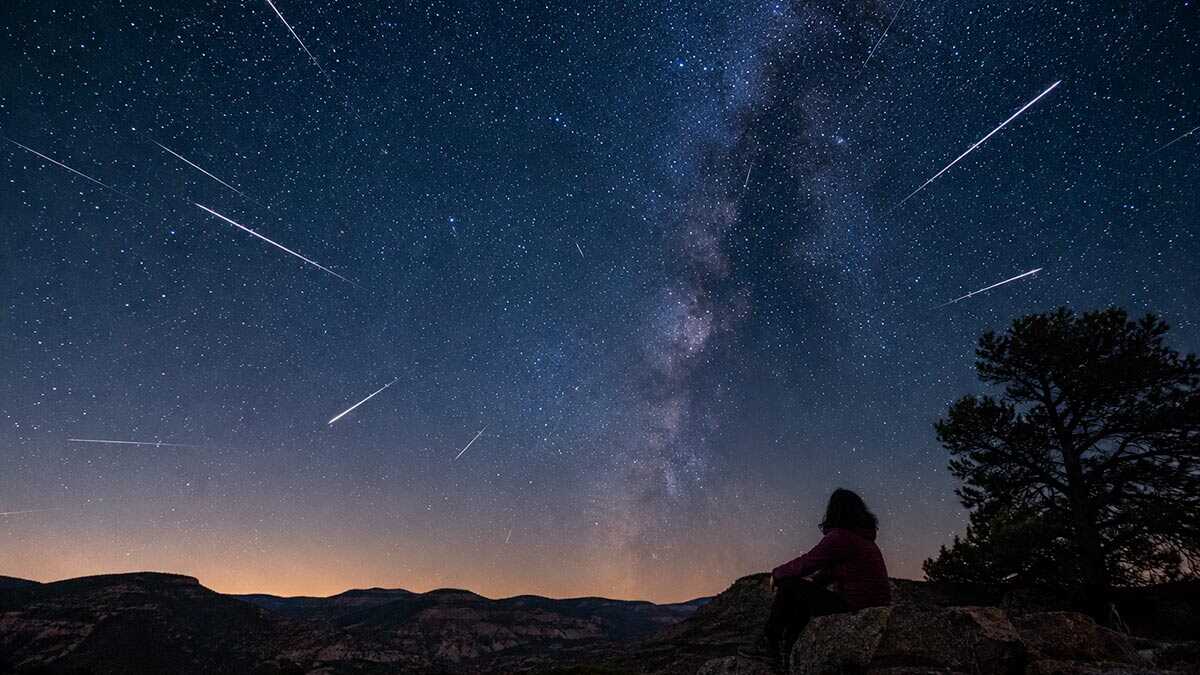
To enjoy the Perseids, known as the Tears of St. Lawrence, all you have to do is get away from the lights of the cities and look for a clear horizon. No telescope or binoculars are needed, as meteors can appear anywhere in the sky. It is advisable to let your eyes get used to the darkness for a few minutes and observe patiently.
THREE STARLIGHT TERRITORIES IN TERUEL
Teruel concentrates a good part of the best Aragonese enclaves for observing the sky. The Sierra de Albarracín has been double certified as a Tourist Destination and Starlight Reserve since 2020, while Gúdar-Javalambre and Cuencas Mineras obtained this recognition in 2016 and 2018, respectively. These distinctions attest to the quality of its skies for astronomical observation.
The low light pollution and the breadth of the horizon make these regions some of the best places in Aragon to watch the meteor shower during the nights of August.
GALACTICA AND THE JAVALAMBRE OBSERVATORY
In Arcos de las Salinas is Galactica, the astronomy dissemination centre promoted together with the Centre for the Study of Physics of the Cosmos of Aragon (CEFCA). From this point the quality of the Teruel sky, considered among the best in the northern hemisphere for astronomical research, is valued.
Coinciding with the Perseids, Galactica organizes activities aimed at the public between August 9 and 14. Visitors can tour its facilities, learn about its exhibitions and get closer to the scientific work that is carried out around the Javalambre Astrophysical Observatory.
huesca también mira al cielo
The astronomical offer of Aragon also reaches the province of Huesca. The Aragonese Astronomical Centre Espacio 042, located in the capital of Huesca, has a planetarium, telescopes and a programme of informative activities throughout the year.
During the period of the Perseids, it usually organizes night observations dedicated to this meteor shower, as well as projections and activities to learn about the origin of the so-called Tears of San Lorenzo.
VIEWPOINTS, ASTROTOURISM AND EXPERIENCES UNDER THE STARS
The Aragonese offer goes beyond the interpretation centres. Gúdar-Javalambre has an astronomical viewpoint in each of its 24 municipalities and develops activities such as popular observations, astronomical meetings or proposals linked to the so-called Route of the Constellations.
In addition to this, there are other experiences spread throughout the community, from observations in natural spaces to astrotourism activities such as the Star Baths of the Monastery of Olivar, in Estercuel, as well as initiatives promoted by astronomical groups and companies specialized in Huesca, Zaragoza and Teruel.