









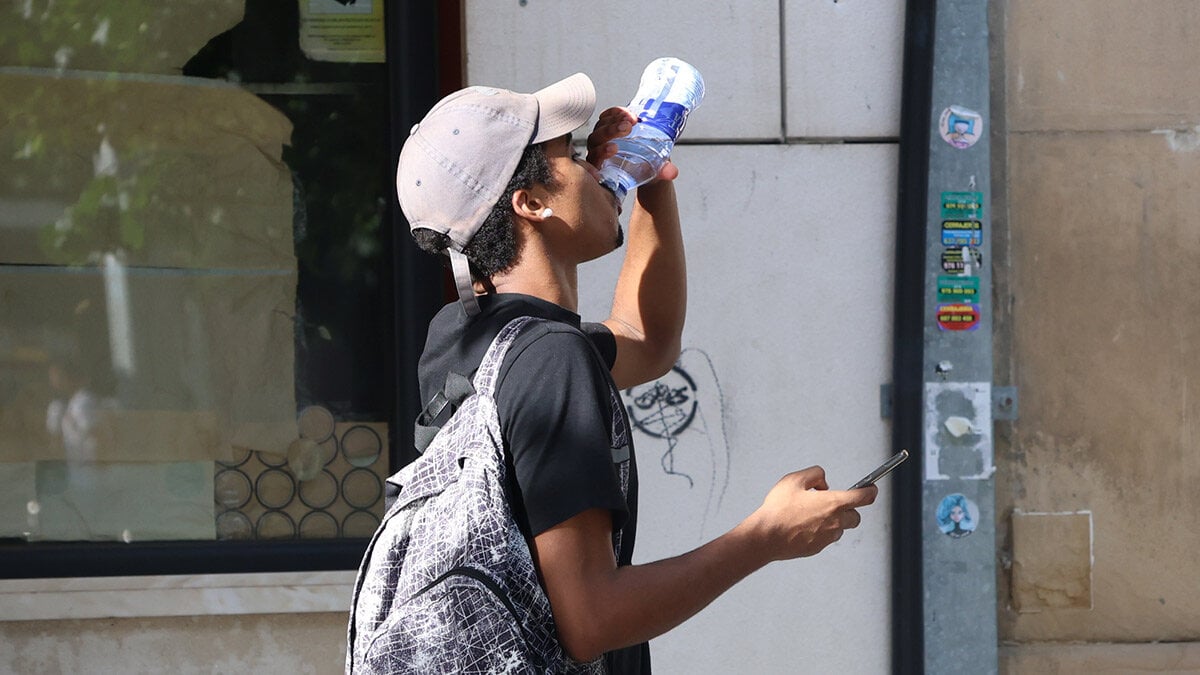
Zaragoza is preparing to face one of the most sweltering weeks of the summer. This Monday the orange alert of the Municipal Emergency Plan will be activated due to a heat wave in the face of an episode of extreme temperatures that could leave maximums of up to 44 degrees and nights in which the thermometer will hardly give a truce.
With this scenario, protecting yourself from the heat is no longer just a matter of comfort. Prolonged exposure to such high temperatures can lead to dehydration, aggravate chronic diseases and even trigger heat stroke, the most serious health consequence.
Juan Castro, a nurse specialist in Family and Community Nursing at the San Pablo health center in Zaragoza and second member of the College of Nursing of Zaragoza, insists that the main tool to avoid these problems is to anticipate the symptoms. «The main thing at this time is prevention. You have to try not to get heatstroke or dehydration,» he says.
HEAT STROKE, THE MOST DANGEROUS CONSEQUENCE
The main health risk during episodes of extreme temperatures is heat stroke. It occurs when the body reaches an excessively high temperature and loses the ability to regulate itself properly, a situation that can be aggravated if the person exercises, works in the sun or does not replace the fluids they lose.
«It is the most serious thing that can happen,» Castro points out. The risk increases especially when several circumstances coincide: many hours of exposure, poor hydration and intense physical or work activity. Before reaching that extreme, the body can lose water progressively. Constant sweating, coupled with insufficient fluid intake, can cause low blood pressure, weakness, tiredness, and a general feeling of discomfort.
HEAT CAN WORSEN CHRONIC DISEASES
High temperatures do not affect everyone in the same way. Young children, the elderly and patients with chronic diseases are the most vulnerable groups. Hypertension, diabetes or kidney disease can decompensate during these days. Heat alters how the body works and can change the way it responds to certain treatments.
«These people are more fragile and have to be especially careful,» says the nurse. Fluid loss can reduce the effectiveness of the kidney and increase the concentration of some medications in the blood, which favors their accumulation in the body.
Therefore, those who take medication on a regular basis should be extremely hydrated and avoid staying for too long in very hot environments. If you have any questions or changes in your health condition, you should consult a health professional and not modify the treatment on your own.
DRINKING WATER, EVEN IF YOU DON’T FEEL THIRSTY
One of the most important tips is not to wait until you are thirsty. During the hottest days, the body loses fluids constantly, even if the person is not fully aware of it. Castro recommends consuming at least one and a half liters of fluid a day and approaching two liters when temperatures are especially high.
Water should be the main drink, although part of that hydration can also come from infusions, broths, fruits or other foods rich in water. Drinks with sugar or mineral salts can be useful in certain cases, especially when there is a significant loss of electrolytes. However, they should not replace water on a regular basis, since their abuse can have the opposite effect to that intended and promote dehydration.
Vigilance should be greater among older people, as the feeling of thirst decreases with age. «They do not have the same need to ask for water as a young person, so you have to insist that they drink,» he stresses.
THE TIMES WHEN IT IS ADVISABLE TO AVOID THE STREET
From 35 or 36 degrees it is necessary to take extreme precautions, especially during the central hours of the day. The nurse recommends avoiding physical exercise, intense work and direct exposure to the sun approximately between 11:00 a.m. and 8:00 p.m. Not only are the highest temperatures recorded in this range, but ultraviolet radiation and the risk of sunburn also increase.
At home, it is advisable to ventilate first thing in the morning, when the outside air is even cooler, and then close windows, blinds and curtains to prevent heat from entering. Fans or HVAC systems can help reduce the indoor temperature.
THE SYMPTOMS THAT SHOULD ALERT YOU
The body usually warns when heat starts to become a problem. General malaise, cramps, nausea, vomiting or a sudden feeling of disorientation are some of the symptoms that should not be overlooked. In the face of these signs, the person should immediately leave the heat source, rest in a cool place and begin to hydrate. If symptoms are severe, confusion appears, or there is no improvement, medical attention is needed.
Evenings also call for caution. Night temperatures above 23 or 24 degrees make it difficult to rest and can cause the body to accumulate fatigue after several days of continuous heat.