









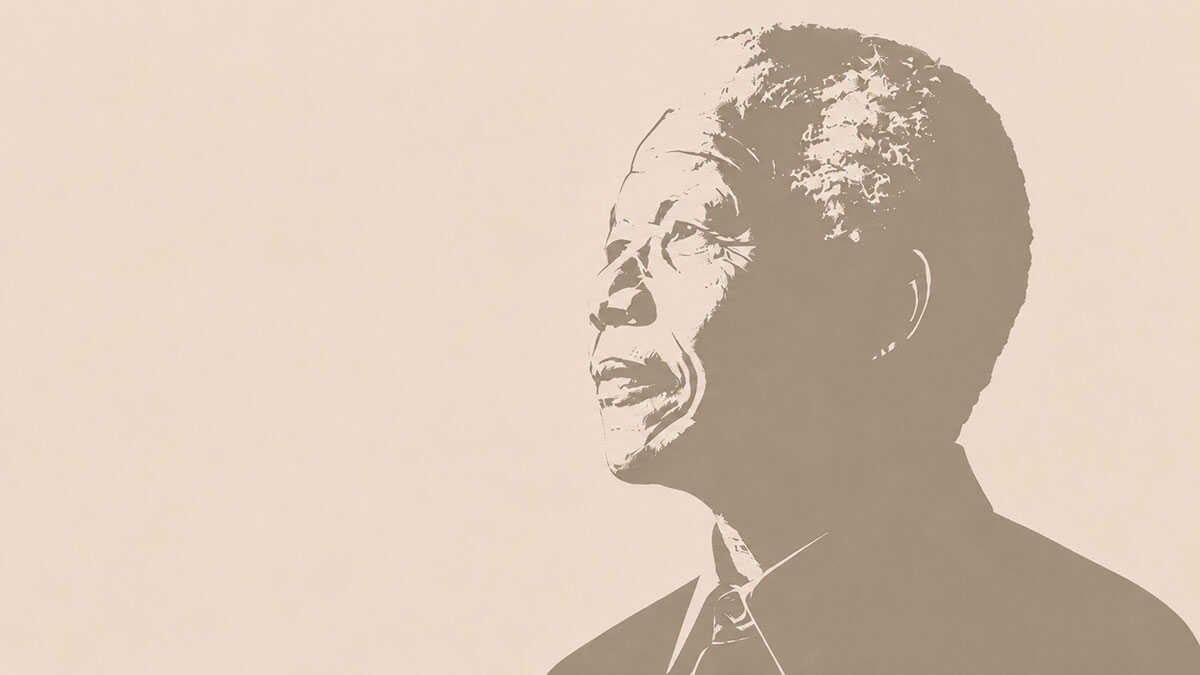
«Education is the most powerful weapon we can use to change the world» is one of Nelson Mandela’s best-known phrases. He delivered it in 2003, during the inauguration of the Mindset Network, an educational proposal for Africa through information technologies.
On the occasion of the Nelson Mandela International Day, which is celebrated every July 18, it is valid to ask: what can his figure contribute to today’s education?
Nelson Mandela was a South African leader internationally recognized for his fight against apartheid, the system of racial segregation that systematically discriminated against the black population of South Africa. His political commitment, his defense of equality and human dignity led him to prison for 27 years.
Once freed, Mandela was instrumental in the process of national reconciliation and, in 1994, became South Africa’s first black president, a position he held until 1999. His purpose: «The time has come to heal the wounds. The time has come to overcome the obstacles that divide us. Now is the time to build.»
Mandela received, together with Frederik de Klerk (president of South Africa between 1989 and 1994) the Nobel Peace Prize. The award recognized his efforts against apartheid and laying the foundations for a new democratic South Africa.
Mandela argued that education «is the most powerful weapon we can use to prepare our youth to assume their role as leaders of tomorrow». This conviction was also reflected in 1990, during a speech at Madison Park High School in Boston, where he advised the young people present: «We would like to recommend that, as far as possible, you stay in school.»
He
exposed education as a strategy for the improvement of social life: «Through education the daughter of a peasant can become a doctor, the son of a miner can become the head of the mine and the son of a farmer can become the president of a nation.»
The
United Nations links Mandela’s legacy with freedom, the fight against racial discrimination, reconciliation, human rights, poverty and peacebuilding. In the classroom, educating for freedom means: thinking, asking, dissenting with respect and understanding that no human being should be reduced because of his or her origin, race, language, gender or social condition.
In short: «One way to build a better future for children is to give them the possibility to defend their own interests.»
———————————————————
Learn more about Nelson Mandela:
- Nelson Mandela International Day, July 18: https://www.un.org/es/events/mandeladay/
- Nelson Mandela Foundation: https://www.nelsonmandela.org/
- Nobel Prize: https://www.nobelprize.org/prizes/peace/1993/mandela/facts/
- Invictus (2009 film), a film directed by Clint Eastwood and starring Morgan Freeman and Matt Damon. https://www.imdb.com/es-es/title/tt1057500/
- Mandela: From Myth to Man (2013). Director: Justin Chadwick
https://www.imdb.com/es-es/title/tt2304771/
- Winnie (2011). Director: Darrell Roodt. https://www.imdb.com/es-es/title/tt1551641/
- Adiós Bafana (2007). Director: Bille August. https://www.imdb.com/es-es/title/tt0438859/
- Mandela and de Klerk (1997). Director: Joseph Sargent. https://www.imdb.com/es-es/title/tt0119607/