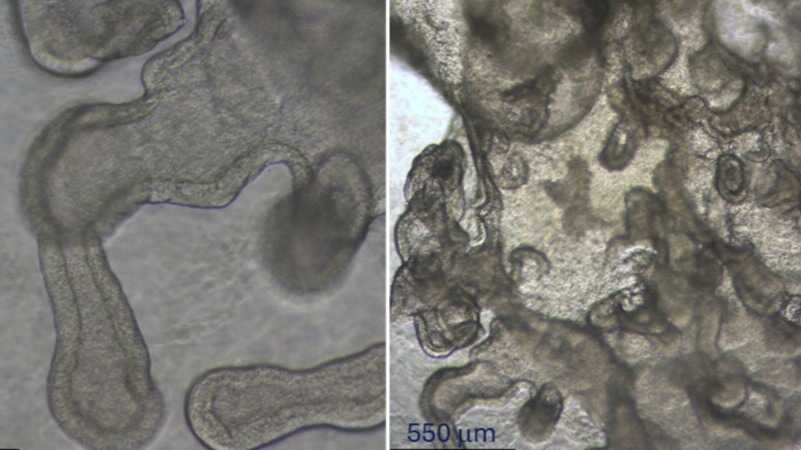
Researchers at the Carlos III Health Institute (IscIII) have taken a new step in the development of laboratory-generated human «mini-lungs» by identifying the limitations of several synthetic and biological alternatives aimed at replacing materials of animal origin currently used in the production of these organoids. According to this public institution, the results «will guide future research» to improve the manufacture of lung tissues for the study of diseases, the evaluation of drugs and, in the longer term, applications of regenerative medicine«.
Organoids are miniaturized versions of human organs obtained from stem cells in the laboratory. Although they do not replace an entire organ, they reproduce many of its functions and have become «a key tool» for researching diseases and developing new treatments,» according to the IscIII.
The work, published in the scientific journal ‘Stem Cells Research & Therapy‘, has been carried out by scientists from the Functional Unit for Research on Chronic Diseases (UFIEC) and the National Center for Microbiology (CNM), both integrated into the IscIII. The study analyzed different hydrogels, materials that support the growth of stem cells capable of forming three-dimensional structures similar to miniature human lungs.
The researchers compared the behavior of three hydrogels of non-animal origin, Biogelx, PLTMax and GelMA, with Matrigel, the most widely used substrate currently for organoid generation. The aim was to test whether these alternatives could promote the development of ‘mini-lungs’ with the same efficiency as the reference material and thus move towards models more compatible with future clinical applications in humans.
The results showed that the organoids obtained with the new materials presented structural alterations and a lower degree of cell maturation, so they still do not reach the performance of Matrigel. However, the authors stressed that the data obtained allow «a better understanding of what characteristics» the hydrogels of the future should have and open new avenues to develop synthetic or human supports more suitable for the engineering of lung tissues.
IMMEDIATE APPLICATIONS
Although these ‘mini-lungs‘ are not intended for the direct treatment of patients for now, they do have immediate applications in biomedical research. Organoids make it possible to reproduce biological processes that take place in the human lung in the laboratory, making it easier to study respiratory infections, chronic diseases and genetic alterations without the need to resort to animal models.
In addition, these structures can be used to test the efficacy and safety of new drugs before they reach clinical trials. The scientists of this institute considered that this type of model «can contribute to accelerating» the development of personalized treatments and improve the understanding of complex pathologies that affect the respiratory system.