The total solar eclipse on August 12 did not go unnoticed by anyone, including animals. Sheep that reduced their activity, hens that advanced their nocturnal behavior and equids with changes in their usual rhythms are part of the first conclusions of a study carried out by researchers from the universities of Zaragoza and Salamanca.
The results are still preliminary, but they show that the animals detected the changes coinciding with the eclipse, although not all of them reacted in the same way or exactly during the seconds of total darkness. To study it, the scientists monitored sheep and chickens in Zaragoza, birds in Burgos and several equids in the Cañizar Wetland, in Teruel.
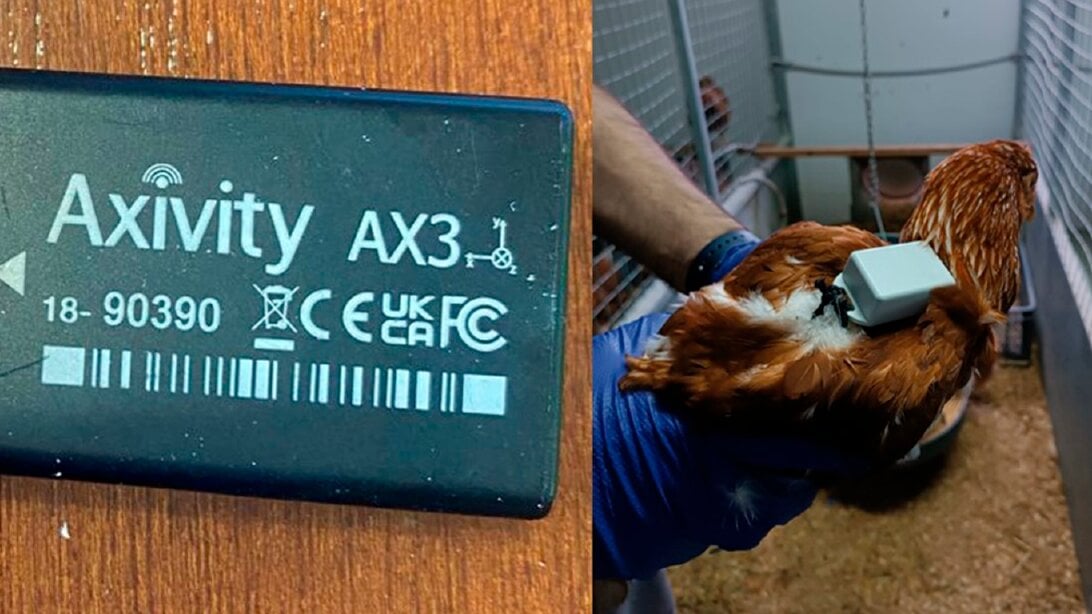
In Zaragoza, ten sheep were monitored for six days with accelerometers and five of them, in addition, with devices capable of measuring temperature and heart rate. Between 8:24 p.m. and 8:28 p.m. on the day of the eclipse, their average activity fell by about 40% compared to other days, although the physiological response was much more uneven between individuals.
THE HENS BROUGHT FORWARD THEIR NIGHTLY ROUTINE
16 hens were also studied at the Faculty of Veterinary Medicine of Zaragoza. The eclipse did not reduce their total activity during the day, but it did change the way in which they distributed it: after totality they moved less and advanced their transition to a night-time behavior by about 18 minutes.
The pattern was even more pronounced in Burgos, where six hens were monitored in collaboration with the University of Salamanca. Five of them advanced their afternoon transition by 40 to 60 minutes and all six showed less activity after totality.
In addition, the first analyses of its constants point to a deceleration of the heart rate after the eclipse, more intense and prolonged than that observed on a normal afternoon. The researchers are now continuing to study this behavior to see how closely it was related to the phenomenon.
THE EQUIDS OF TERUEL REACTED DIFFERENTLY
In the Cañizar Wetland, between Cella and Villarquemado, five equids were monitored with the collaboration of the La Dula Association. Their first answers were very different from each other, although later a common pattern appeared: between 9:20 p.m. and 9:39 p.m., they were all less active than on other days, with an average reduction of 18.6%.
One of the protagonists was a donkey equipped with activity sensors and physiological constants. Before totality he briefly reduced his movements, but then he became active again, while his heart rate went from 46 beats per minute to values close to 60-63 during and after the eclipse.
The researchers insist that the results don’t mean that all animals simply confused the eclipse with night. Each species and even each individual reacted differently, so future analyses will try to determine what environmental changes actually caused these responses and to what extent a few minutes of darkness were able to alter their behavior.