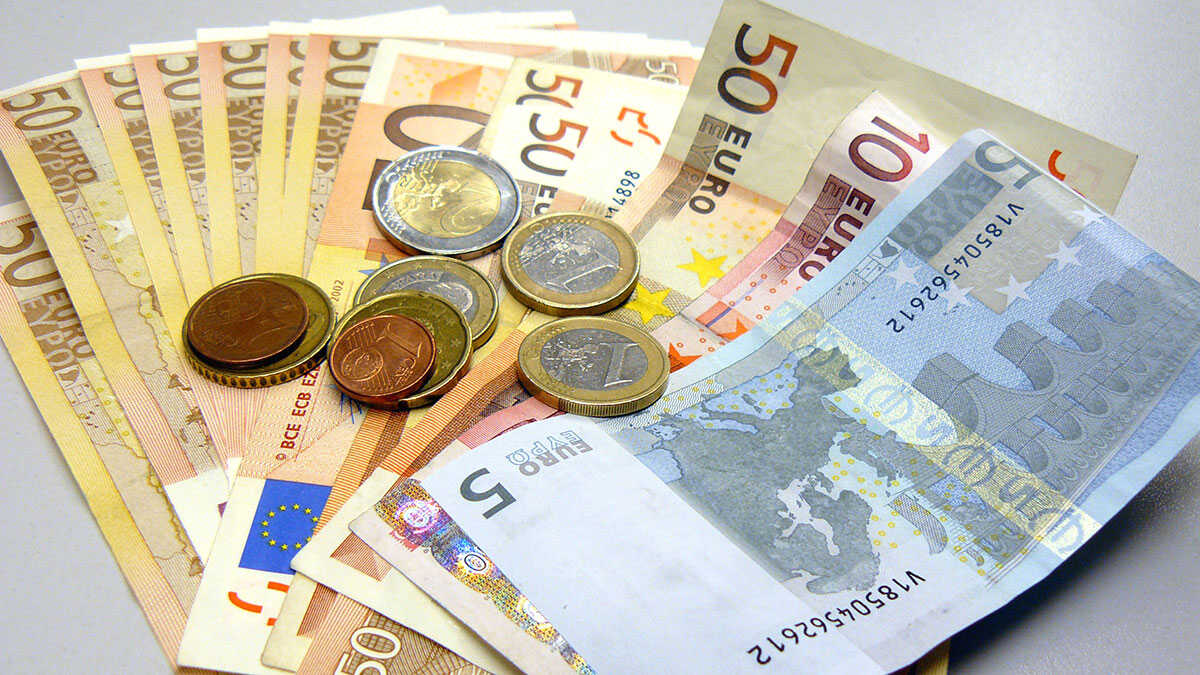
The movements of money in cash from certain amounts are under the radar of Treasury. Banks must report certain transactions of their customers and one of the key limits is 3,000 euros. When this figure is exceeded, financial institutions financial institutions must include in their information returns the impositions, withdrawals of funds and collections of documents made with coins or banknotes.

Exceeding 3,000 euros does not mean that it is forbidden to deposit or withdraw that money. This is an information obligation that falls on the bank, which must communicate to the Tax Administration the data corresponding to these operations. These include the amount, the date, the identification of the person making the movement and the account in which it is made.
WHAT HAPPENS TO THE 500-EURO BANKNOTES
The 500 euro banknotes are also under the spotlight of the Tax Agency. In judgments of 28 November 2013 and 7 February 2014, the Supreme Court upheld the obligation of banks to provide the Treasury, when required, with information on transactions carried out with these banknotes.
This case is different from the ordinary informative declaration of cash movements greater than 3,000 euros. The case law on 500 euro banknotes derives from information requests from the Tax Administration, so it should not be interpreted as a general threshold equivalent to 3,000 euros. In addition, the 500 euro banknotes are still legal tender despite the fact that they were no longer issued in January 2019.
HOW MUCH CASH CAN YOU CARRY
A person can transport cash, but from certain amounts he has the obligation to declare it. Those who enter or leave Spain with 10,000 euros or more, or its equivalent in foreign currency, must previously submit a declaration of movements of means of payment.
The amount is very different when the trip is made within Spain. Movements through national territory of means of payment for an amount equal to or greater than 100,000 euros, or its equivalent in foreign currency, must also be declared in advance. This obligation corresponds to the natural person who transports the money, whether they act on their own behalf or on behalf of a third party.
The regulations consider movement any change of place or position of the money that occurs outside the domicile of its bearer. During the transfer, the means of payment must be accompanied by the corresponding duly completed declaration and be transported by the person who appears as the bearer.
We want to know your opinion
Comment on the news on our Networks: Facebook, Instagram, TikTok, X, Youtube, Linkedin…
Sign up for free to our newsletter and take us on your mobile by downloading the App or in the WhatsApp.
channel
Add us to Google’s new «Preferred Sources» feature to always be informed by clicking directly here
And for direct contact by email with our journalists: redaccion@aragondigital.es
Because you are also Aragón Digital
![[EN] The Treasury monitors these cash movements: when the bank must report and from how much must be declared](http://www.disenoaragon.es/wp-content/uploads/2026/08/2026082009222986513-1-150x150.jpg)
![[EN] The Treasury monitors these cash movements: when the bank must report and from how much must be declared](http://www.disenoaragon.es/wp-content/uploads/2026/08/2026082012081912436-150x150.jpg)