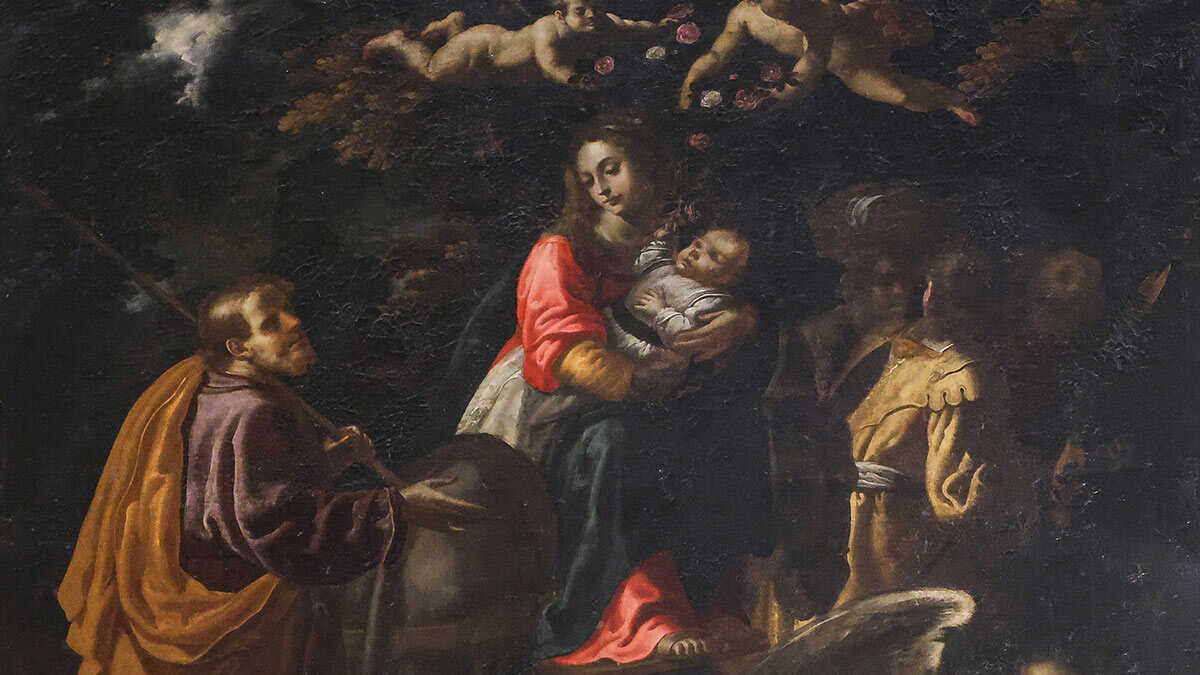
The saint’s day commemorates St. Pius X, one of the most outstanding pontiffs of the early twentieth century and a figure recognized for his defense of tradition, the renewal of religious life and his closeness to the faithful.
The celebration of this day allows us to approach the trajectory of a saint who dedicated his pontificate to strengthening the Catholic faith, promoting religious formation and attending to the needs of the most disadvantaged, leaving an important legacy within the Church.
ST. PIUS X
St. Pius X was born Giuseppe Melchiorre Sarto in 1835 and was elected pope in 1903, remaining at the head of the Catholic Church until his death in 1914. During his pontificate he promoted different reforms related to liturgy and catechesis, while defending Catholic doctrine and tradition against the modernist currents of the time.
The pontiff was also known for his humble character and for maintaining a special concern for the most needy people. He opted to improve the education and formation of priests, convinced that their preparation was fundamental for the life of the Church, and he also showed a deep devotion to the Virgin Mary.
St. Pius X was canonized in 1954 and his figure remains linked to important reforms of the Church at the beginning of the twentieth century. Among his legacy is the encyclical Pascendi Dominici Gregis, directed against theological modernism, as well as different measures related to the liturgy and religious life that marked his pontificate.
WHY ARE SAINTS CELEBRATED?
Onomastics is a way to recognize and honor their spiritual achievements and to seek their guidance and inspiration in our own lives. Saints are venerated as spiritual leaders or figures who have attained a high level of holiness and have lived their lives in the service of God or a particular religion.
Many saints have a special day dedicated to them, which is celebrated by the faithful around the world. To this end, different religious ceremonies are held in each culture, reading their teachings or visiting sacred places associated with them.
![[EN] Which saint is celebrated today, Friday, August 21, 2026?](http://www.disenoaragon.es/wp-content/uploads/2026/08/2026082018272595316-150x150.jpg)
![[EN] Which saint is celebrated today, Friday, August 21, 2026?](http://www.disenoaragon.es/wp-content/uploads/2026/08/2026082019505554563-150x150.jpg)