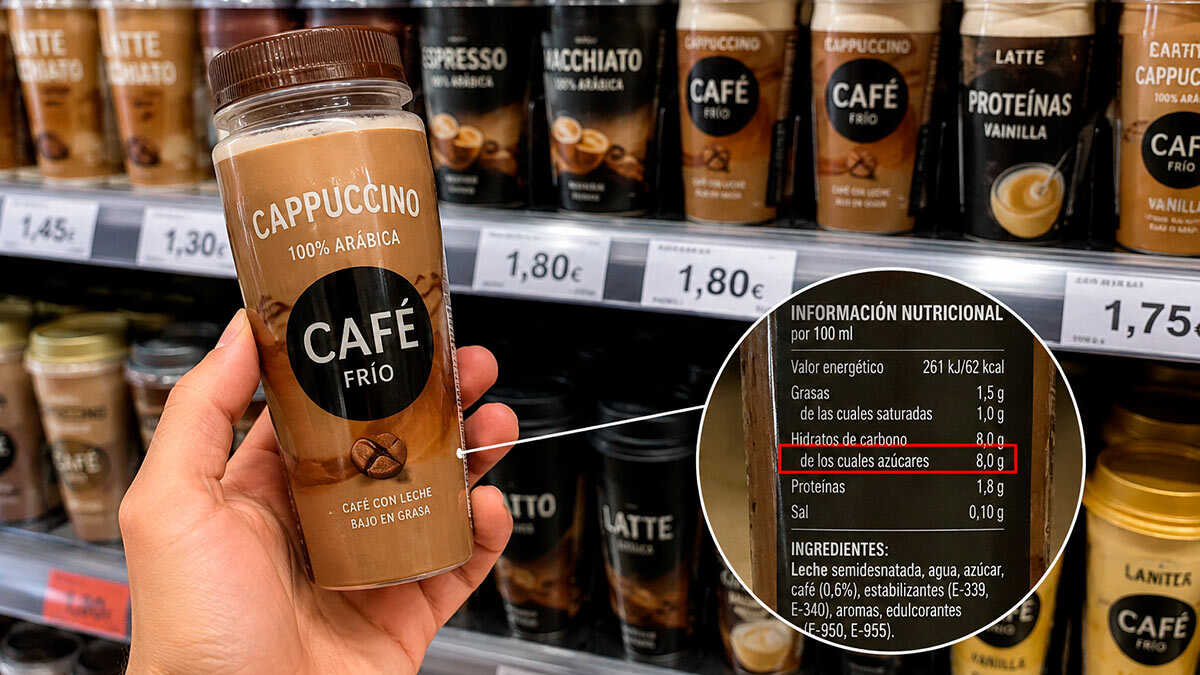
Ready-to-drink cold brew coffees have become a convenient alternative for those looking for a caffeine fix without having to brew anything, especially when the heat is on. Latte, Cappuccino, Espresso, protein, lactose-free or even vegan versions fill supermarket fridges, but behind these small glasses a considerable amount of sugar can be hidden.
The Organization of Consumers and Users (OCU) has analyzed 91 refrigerated coffees available in supermarkets and 36 of them fail their Healthy Scale, an algorithm that combines Nutriscore values with the presence of additives and flavors. In other words, practically four out of ten do not exceed the organization’s assessment.
The main problems are excess sugar and additives, present to a greater or lesser extent in practically all varieties: Latte, Cappuccino, Macchiato, Decaffeinated, Protein-based, Lactose-free or Vegan. The results are better in Espresso coffees and in Kaiku and Nescafé brand products.
ALMOST FOUR TEASPOONS OF SUGAR PER GLASS
Sugar is one of the most striking points of the analysis. A 250-milliliter glass contains an average of 19 grams, an amount equivalent to almost four teaspoons. The figure increases even more in Cappuccinos, which reach 23 grams per glass, as sugar is used to neutralize the bitterness of the coffee and integrate the flavor of the chocolate powder.
Protein coffees and vegan coffees usually contain slightly less sugar. Fats, on the other hand, do not represent a major problem in these drinks, mainly because water is their main ingredient. To this are added more discreet amounts of coffee and milk when the product incorporates it.
The high sugar content does have an impact on calories. A 250-millilitre glass provides an average of 155 kcal, even more than a 330-millilitre can of soft drink. Cappuccinos and varieties flavoured with vanilla, caramel or hazelnut are among the most caloric. Espresso, Protein and Lactose-Free usually fall slightly below 137 kcal, while Vegans provide an average of 110 kcal.
UP TO FIVE DIFFERENT FLAVOURINGS AND ADDITIVES
The second problem detected is in the aromas and additives. Some of these coffees can incorporate five different ones, although there are important differences depending on the presentation and the brand.
Nescafé and Kaiku don’t usually include them in their refrigerated coffees and the Espresso varieties rarely contain more than two. The situation changes in Protein and Lactose-Free coffees, where it is common to find three or more.
The OCU recommends that these coffees should only be consumed occasionally and advises checking both the nutritional labelling and the list of ingredients before choosing one. Specifically, it proposes avoiding those that exceed 8 grams of sugar per 100 millilitres and those that contain two or more additives, especially the phosphates E-339 and E-340 and the sweeteners E-950 and E-955, which it considers not recommended.
![[EN] Watch out for cold coffee from the supermarket: some hide almost four teaspoons of sugar](http://www.disenoaragon.es/wp-content/uploads/2026/08/2026082613010756881-150x150.jpg)
![[EN] Watch out for cold coffee from the supermarket: some hide almost four teaspoons of sugar](http://www.disenoaragon.es/wp-content/uploads/2026/08/2026082613262489356-150x150.jpg)